Artificial Intelligence (AI) is revolutionising many other areas of life, including creativity and artistic expression. The Nuremberg University of Music is researching these interactions in its Artificial Intelligence Laboratory.
Professorship for Music Education and Artificial Intelligence
This research area focuses on music education and artificial intelligence, the didactics of music in the context of artificial intelligence and digital media, and the support of inclusion and music therapy through intelligent music interfaces.
Professorship for Artificial Creativity and Music Interaction
The research conducted by the Professorship of Artificial Creativity and Musical Interaction explores how emerging technologies enable and transform musical practice, interaction, and creativity. At its core are the relationships between humans, musical instruments, and intelligent technological systems, as well as the question of how musical creativity can be understood and reconsidered in this context.
The research brings together three closely interconnected areas: Development, Exploration, and Reflection. Development focuses on creating new intelligent musical systems, instruments, and forms of interaction. Exploration investigates their possibilities and limitations in musical practice through artistic and empirical research approaches. Reflection examines the aesthetic, cultural-theoretical, and societal conditions and implications of these processes. It challenges established notions of creativity, authorship, and musical agency while also informing the development and exploration of new musical systems.
These three perspectives are closely intertwined throughout the professorship's research projects. A current focus lies on hybrid acoustic musical instruments and robotic music interfaces, which provide a basis for developing, exploring through artistic practice, and critically reflecting on new forms of collaborative music-making and co-creativity between humans and artificial intelligence.
Research Projects
-
The naima project develops a modular software system that enables innovative human–AI interaction scenarios. For this purpose, specific datasets are created and AI models are trained for the analysis, interpretation and generation of music. The aim is to promote an open-source technical foundation for versatile co-creative applications.
Publications
Trump, Sebastian/Lunt, Alexander (2025): Sonic Map Explorer – Ein Emergentes Interface Zur Live-Interaktion Mit KI-Musiksystemen. In: Mensch und Computer 2025 - Workshopband, https://dl.gi.de/handle/20.500.12116/46825.
Lunt, Alexander/Trump, Sebastian (2023): Latent Space Explorer. Interactive Rhythm Generation through Musical Actions. In: Proceedings of the 4th Conference on AI Music Creativity. https://aimc2023.pubpub.org/pub/zgc5j7ha.
-
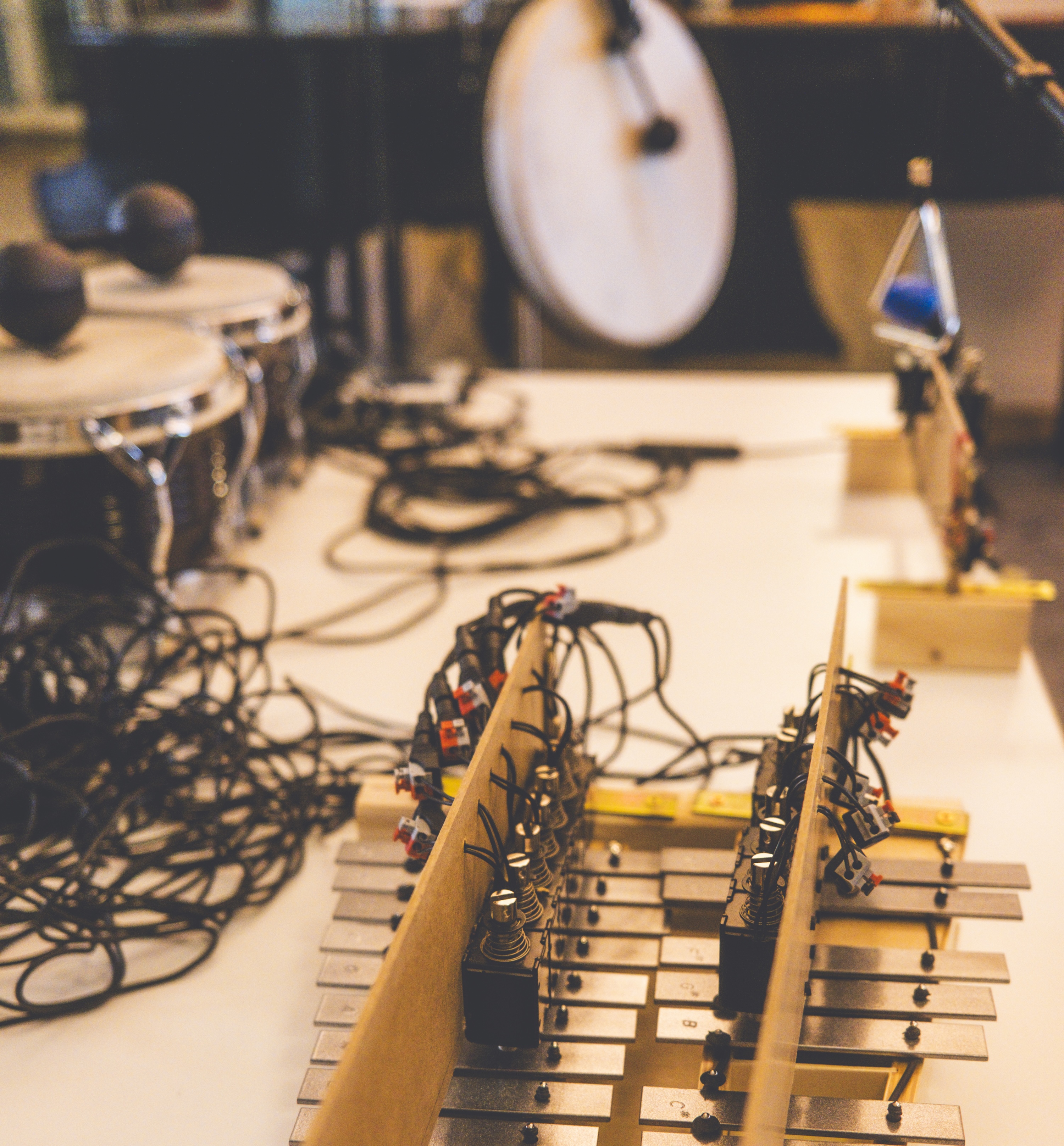
RoboPercussion explores the integration of AI into musical practice using hybrid instruments such as small percussion and mallet instruments, focusing on fundamental forms of musical expression, timbral diversity, and the role of physical interaction. The AI controls robotic actuators, analyses the musical context, and generates its own musical material based on it. The aim is to develop new approaches to human–machine interaction in music and to gain insights into the potential of AI in improvisational collaboration.
Publications
Trump, Sebastian (2024): RoboPercussion. Ein Projekt mit Orff-Instrumenten und Künstlicher Intelligenz am KI-Labor der Hochschule für Musik Nürnberg. In: Orff – Kunst und Pädagogik 5(1).
-
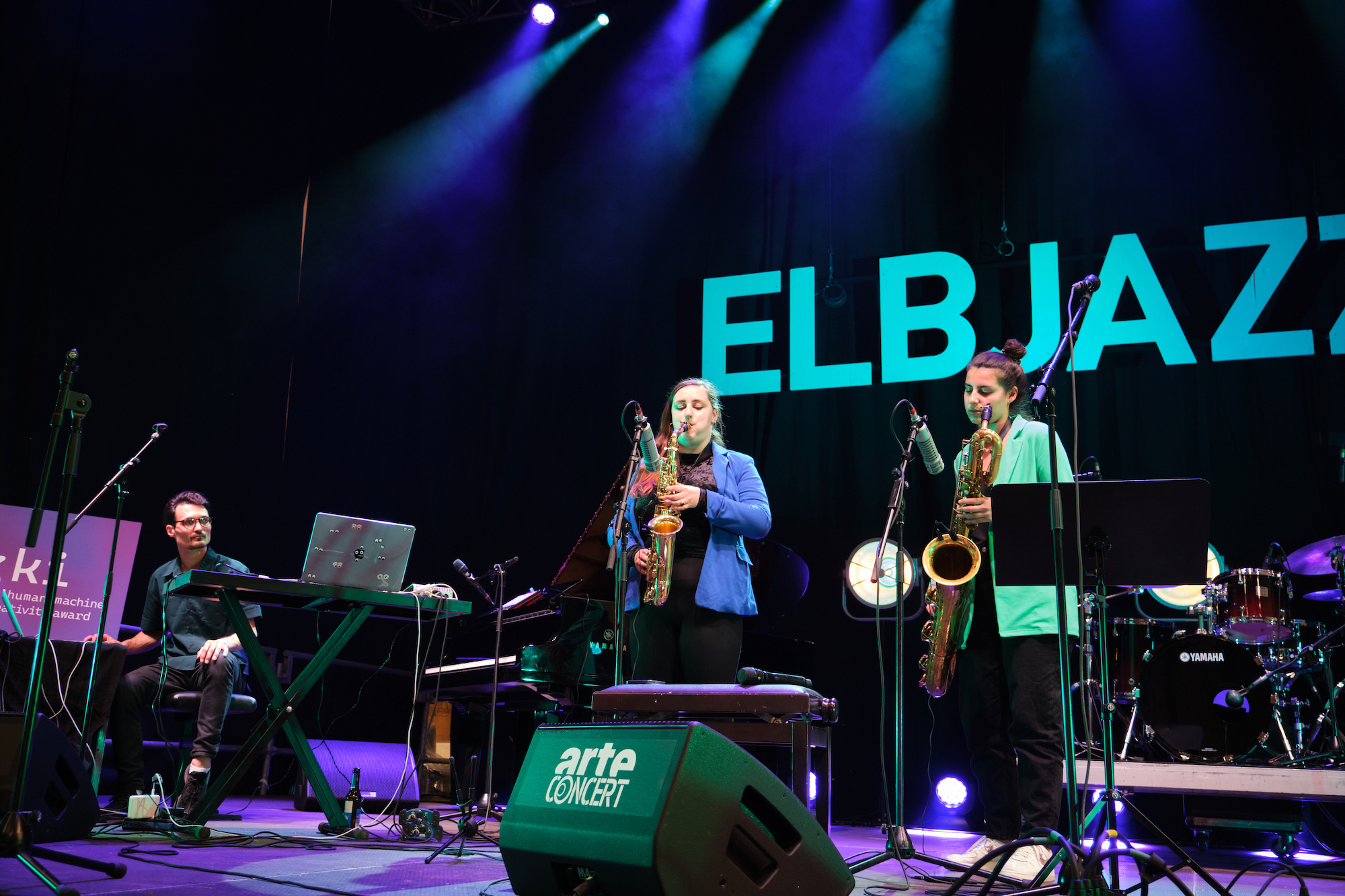
MUSIQ investigates the quality of interaction between human musicians, AI systems and audiences, focusing on musical improvisation in live situations. The goal is to develop evaluation methods for the creative and interactive capabilities of AI systems to better understand their role in musical creative processes. Through interdisciplinary research and public concerts, human–machine collaboration in music is explored in a practice-oriented way and made accessible to a broad public.
-
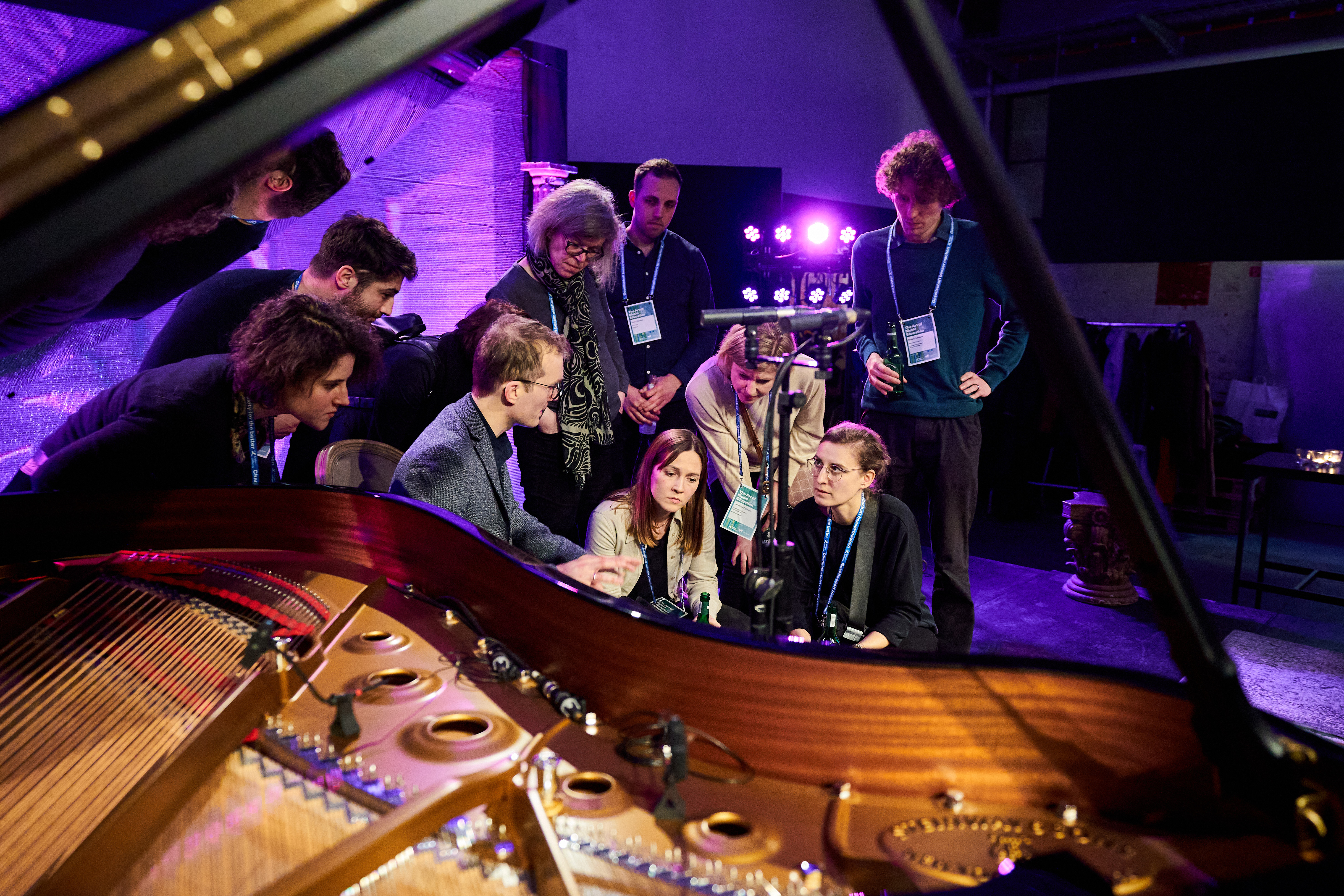
Cooperative project within LEONARDO – Center for Creativity and Innovation, with Prof. Dr. Korbinian Riedhammer and Prof. Dr. Martin Ullrich. At the centre of Spirio Sessions is the Steinway Spirio|r hybrid grand piano, a self-playing piano that serves as an interface for human–AI interaction. Students have been involved in developing various generative AI technologies and in the artistic exploration of this interaction scenario.
Publications
Agchar, Ismael/Baumann, Ilja/Braun, Franziska/Perez-Toro, Paula Andrea/Riedhammer, Korbinian/Trump, Sebastian/Ullrich, Martin (2024): A Survey of Music Generation in the Context of Interaction. arXiv. http://arxiv.org/abs/2402.15294.
Trump, Sebastian/Agchar, Ismael/Baumann, Ilja/Braun, Franziska/Riedhammer, Korbinian/Siemandel, Lea/Ullrich, Martin (2021): Spirio Sessions: Experiments in Human-Machine Improvisation with a Digital Player Piano. Proceedings of the 2nd Joint Conference on AI Music Creativity. Graz.
Press (selection)
WDR: Music ex machina: Künstliche Intelligenz in der klassischen Musik
SWR2 Wissen: Wenn Computer komponieren – Können Maschinen kreativ sein?
-
International cooperation project between the Nuremberg University of Music, the Würzburg-Schweinfurt University of Applied Sciences, the University of Jyväskylä, the RITMO Centre for Interdisciplinary Studies in Rhythm, Time and Motion (Oslo), and the Cambridge Institute for Music Therapy Research (CIMTR).
The project aims to develop an interdisciplinary-informed machine-learning model that automatically analyses and classifies musical interaction in the context of music-therapeutic improvisation. The tool is being developed both as a diagnostic instrument in clinical music therapy and as a research tool for further investigation of musical interaction. Comparative analyses of the generated datasets will make it possible to quantify specific characteristics of musical interaction, e.g., in groups of people with depressive disorders or in contexts of artificial creativity.
Study with Us
In the bachelor’s programmes, you can study and conduct research with us through classes in the Music and Technology module (Project Realisation: Digital Performance), within the elective area Media and Digitality as part of the Key Skills, or in the digitalisation college Disruption in Creativity. Our international master’s programme Interdisciplinary Music Research offers the opportunity for more in-depth engagement in the Artificial Intelligence specialisation.
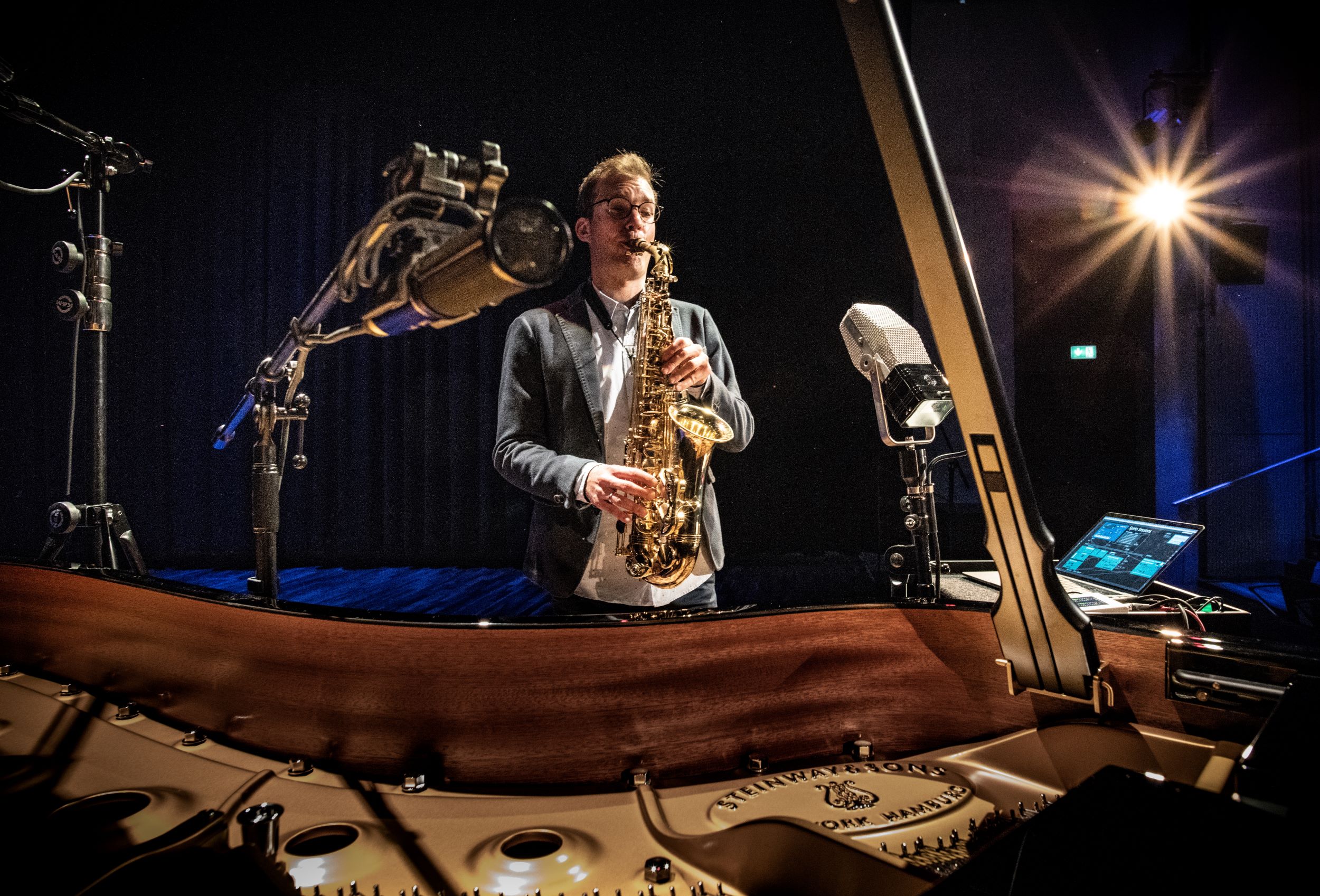
Prof. Dr. Sebastian Trump künstliche Kreativität und musikalische Interaktion

Alexander Lunt Softwareentwicklung: Musik und künstliche Intelligenz
Jens Petzold Laboringenieur KI-Labor
Franziska Reitenspieß Projektassistenz LEONARDO & KI-Labor
Julie Pusch Projektassistenz LEONARDO & KI-Labor (in Elternzeit bis Oktober 2026)
Bastian Vobig Musicology with Focus on AI-supported Improvisation Analysis in Music Therapy Contexts

Gisela Baur-Pajak Didaktische Koordination im Projekt MOTION.KI
Room no KGS 05